
Cemetery - Prophet Helias Church
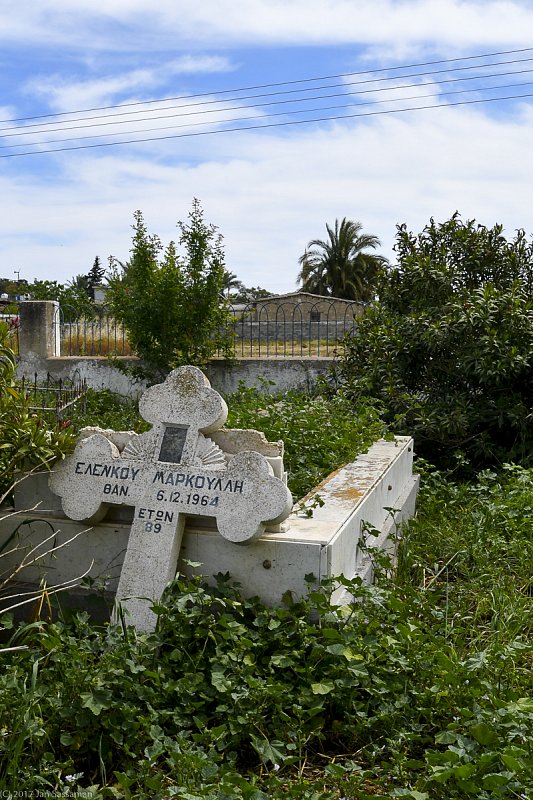
Damaged Tombstone among many others in the Prophet Helias Church cemetery..
Damaged Tombstone among many others in the Prophet Helias Church cemetery..

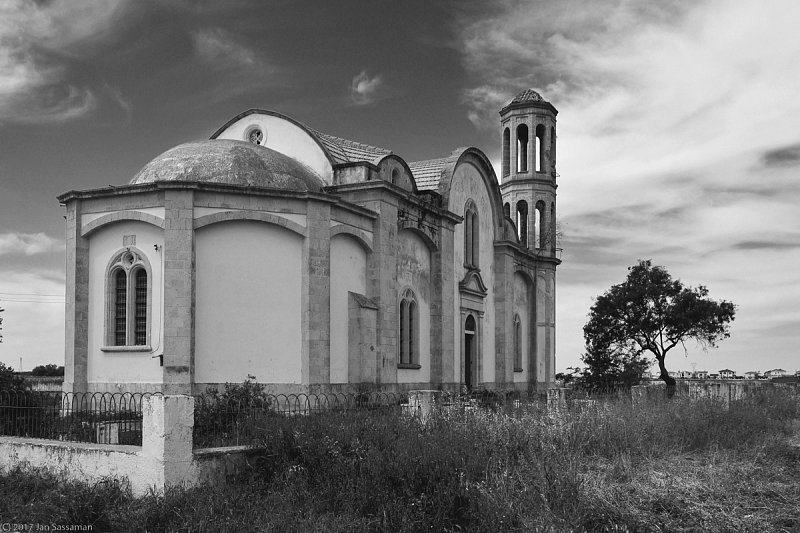
The Prophet Hlias Church, located in the village of Stylloi about 3 to 4 miles west of Salamis north of the buffer zone, is a substantial structure built in the early 20th Century. It was abandoned in 1974 as the local Greek residents fled to the south. While the structure of the church is intact, it appears to have been damaged - one bell tower appears to be missing, there is graffiti on the walls, and the headstones in the churchyard have been smashed.

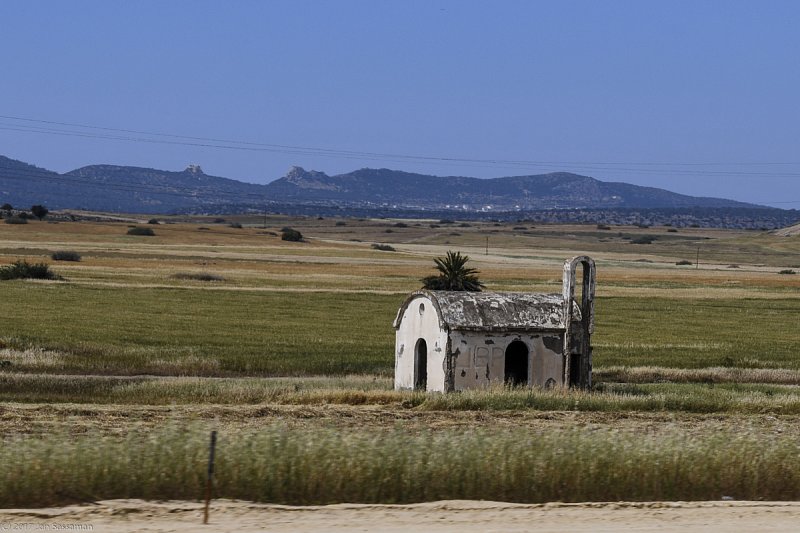
Not all chapels and churches that have been abandoned and/or desecrated as a result of movement of populations following the 1974 invasion of Cyprus by Turkey are grand structures. The small chapel of Panagia Trypimeni, built of concrete in 1970, is one such structure. It is located in Famagusta District in the north, about 20 km north of Famagusta on the road to the Karpas Peninsula to the east.

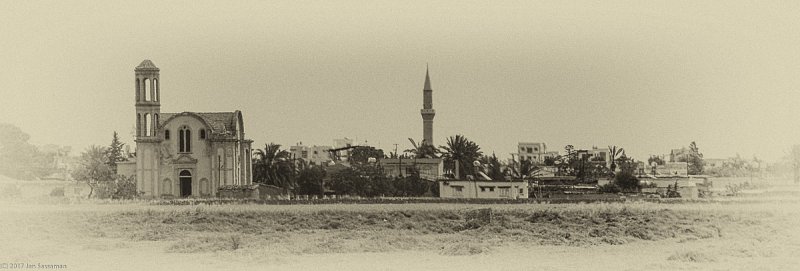
The Village of Stylloi (Pillar in Greek), located some 4 miles west of Salamis north of the buffer zone. Again, as with most towns and villages in Cyprus, there are both churches and mosques. In the north, the churches have been abandoned and are often desecrated, and their icons and relics looted.Such was the case with this church.

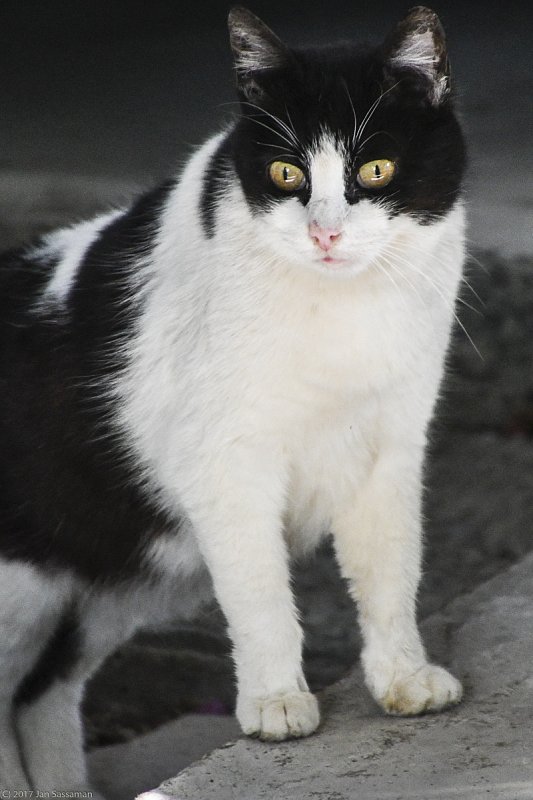
In Cyprus, both North and South, as well as throughout the Mediterranean, cats are ubiquitous. Archaeologists have reported finding evidence of a cat intentionally buried with a human some 9,500 years ago in a tomb from Cyprus. (www.sciencedaily.com/releas...)

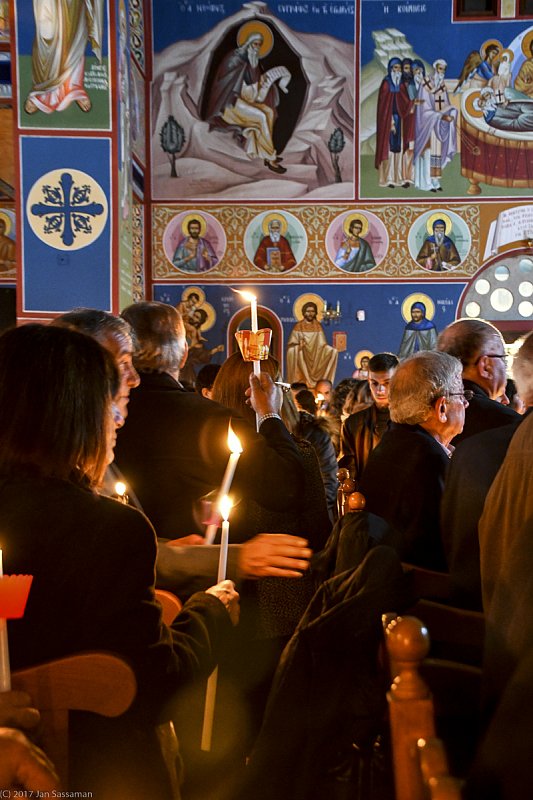
Easter is a significant holiday in the Greek Orthodox tradition, and associated celebrations include both church attendance, sometimes for hours, and meals, also sometimes for hours. In the evening of Saturday before Easter Sunday, there is a candlelight service at midnight when people bring a candle to be lit in church and then hopefully taken home still lit.

Who are the Cypriots? The people of Cyprus ultimately have come from all over the Eastern Mediterranean as well as Europe and to some extent, Asia.Historically, Cyprus has been conquered and occupied by many peoples - by people from the eastern cost of the Mediterranean as early as 8000 BCE, by the Greeks, the Persians, the Ptolemies, the Romans,the Byzantines, the Arabs, the Crusaders, the Franks, the Venetians, the Ottomans, and the British.All have contributed to the making of "the Cypriot", along with many other ethnic groups such as Armenians and Africans. And all have essentially, over generations, been assimilated into that culture which is the Cypriot.

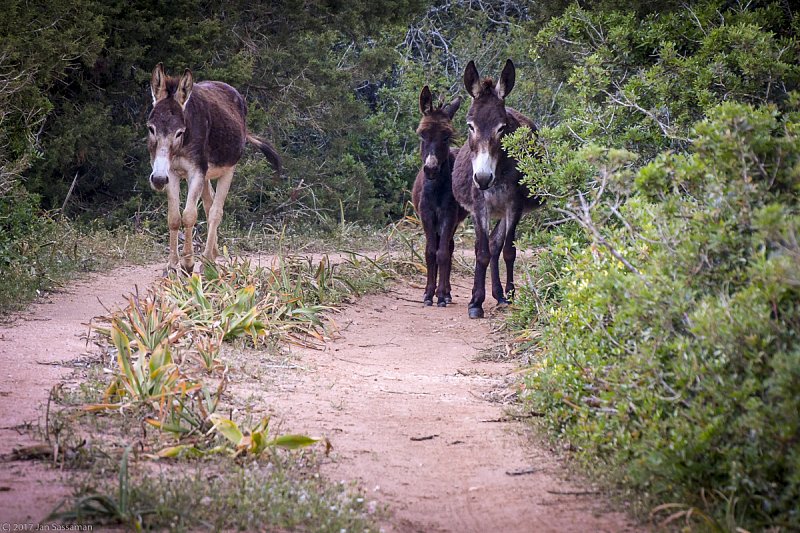
Before the advent of mechanization of agriculture, the donkey was a key farm animal on Cyprus, used for transportation and as a beast of burden. In 1974, when the Greek Cypriot farmers in the Karpas peninsula (extreme north east) fled to the south after the Turkish invasion, many farm donkeys were left behind to fend for themselves. In the years since 1974, a large herd of feral donkeys has developed on the peninsula, a part of which has been set aside as a sanctuary for donkeys.

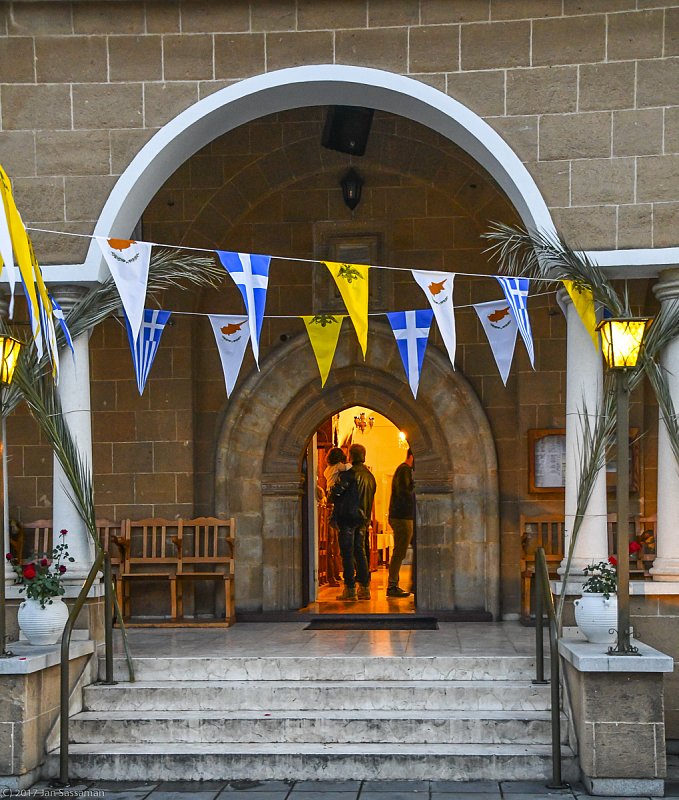
Again, banners representing the flags of Cyprus, Greece, and the Church, here at the entrance to a small church in the Nicosia suburb of Strovolos.

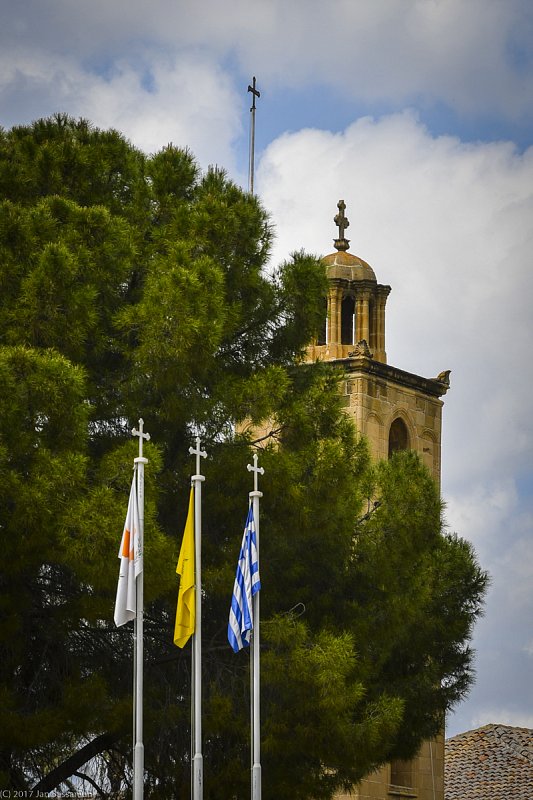
Three flags fly in front of the Archbishop's Palace in Nicosia - from lef to right, the flag of the Republic of Cyprus, a flag representing the Byzantine Empire (double-headed eagle on a yellow field, and the flag of Greece.

St Evlalios was originally constructed in the 6th Century, with additional work done for several centuries. The present structure is reported to have been built in the 16th Century on the remains of the older structure. One of the columns inside of the church is thought to be from the original structure, with the other three carved to match.

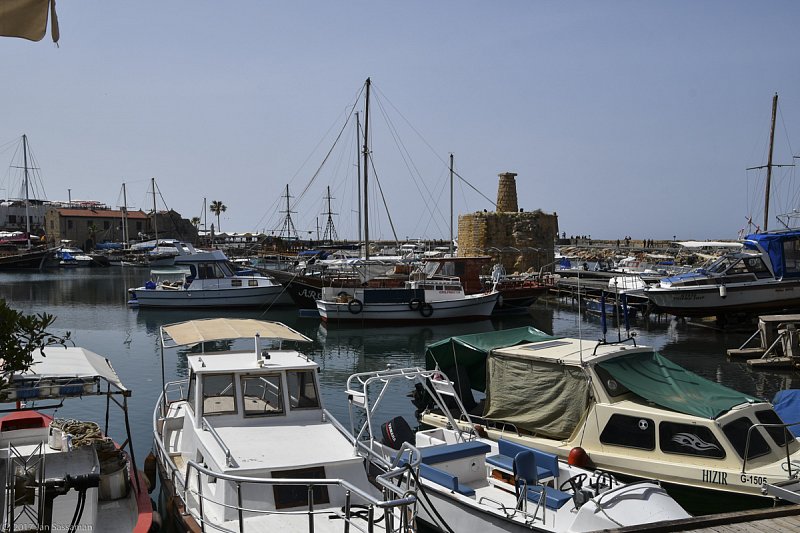
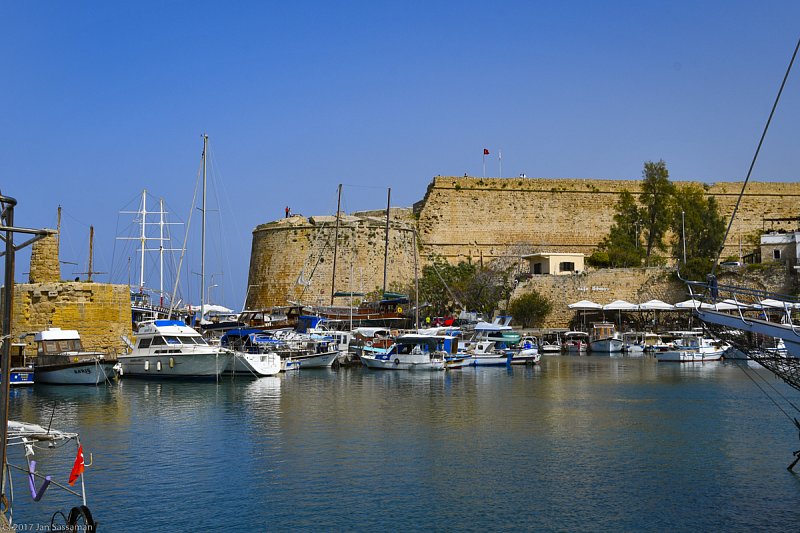
By 2017, five years on, the harbor is clogged with pleasure boats, The road around the harbor is now ringed by restaurants and bars, and there is a bustling nightlife.

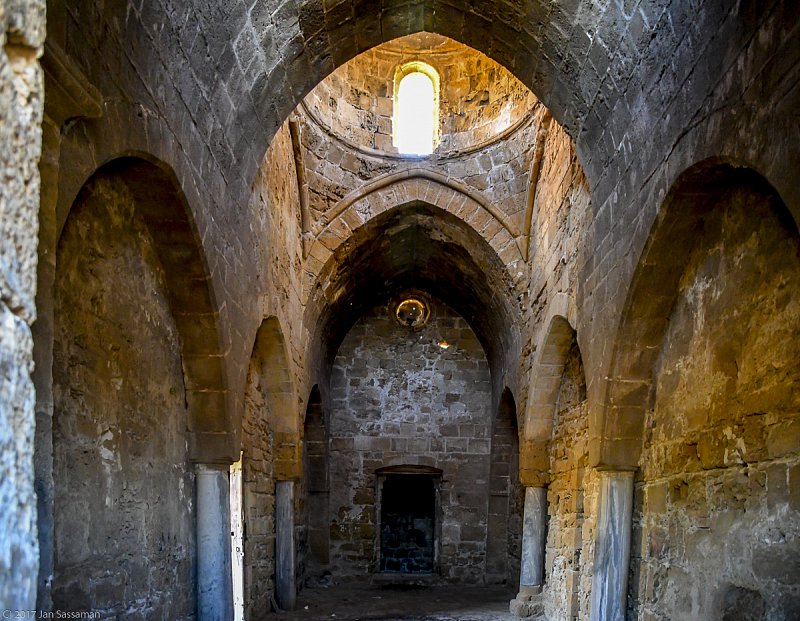
A key feature of the northern port town of Kyrenia is its distinctive medieval harbor and castle. There is a stand-alone Byzantine era church within the north west bastion of the castle, seen here. The harbor is now full of yachts and tourist craft, and few of the people who are there at any given time are likely to be really aware that there is a whole country and population some 15 miles away across the mountains to the south.

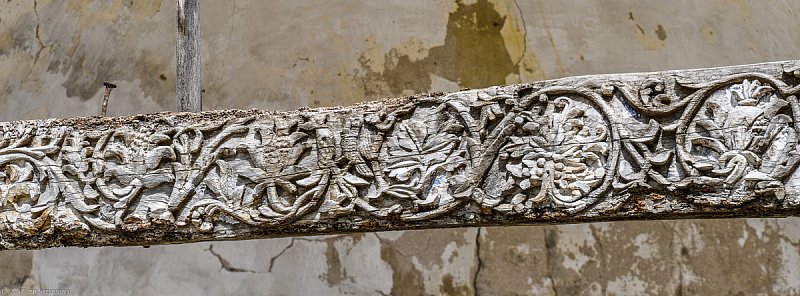
Detail of the carving on the beam of the iconostasis.

Detail of the ont of the left-hand side of the church.

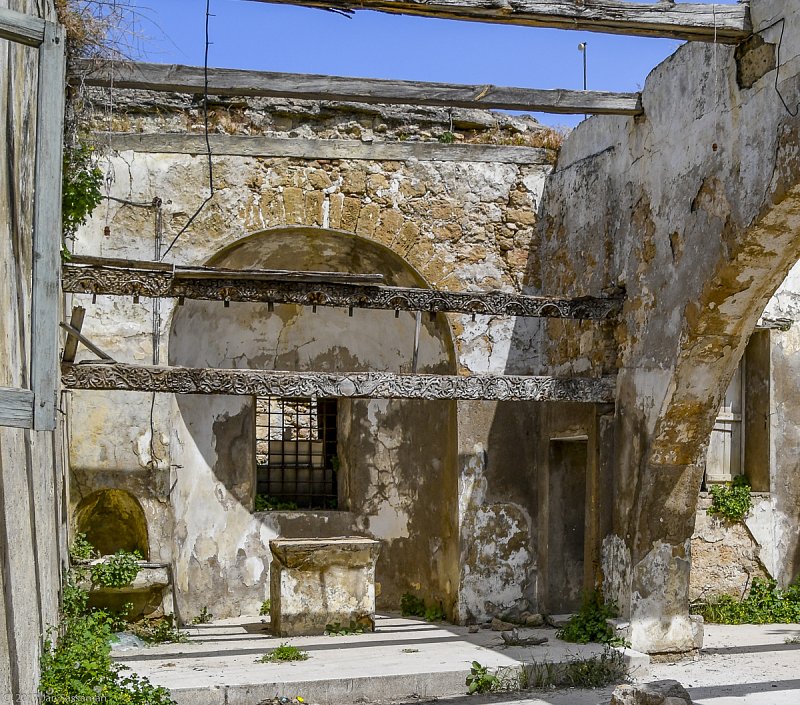
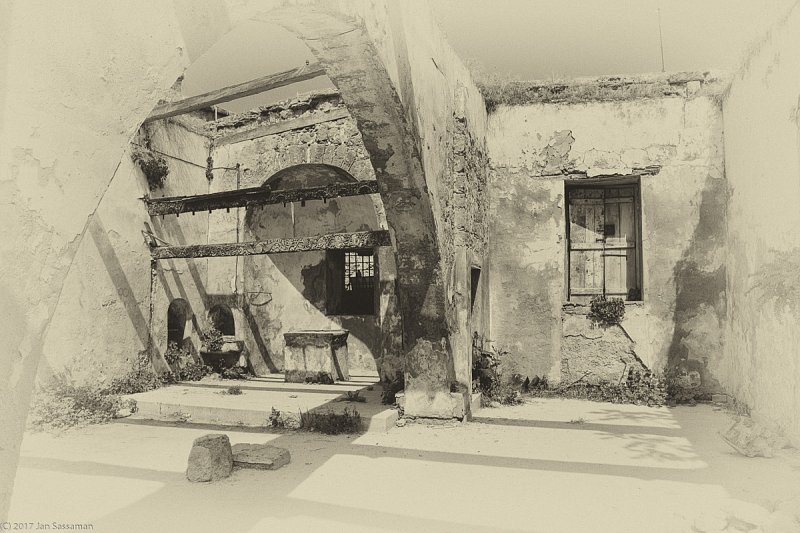
Interior of Panagia Chrysopolitissa - 2017. Note the remaining wooden beams the iconostasis, altar, and font in the left-hand side (north) of the church.

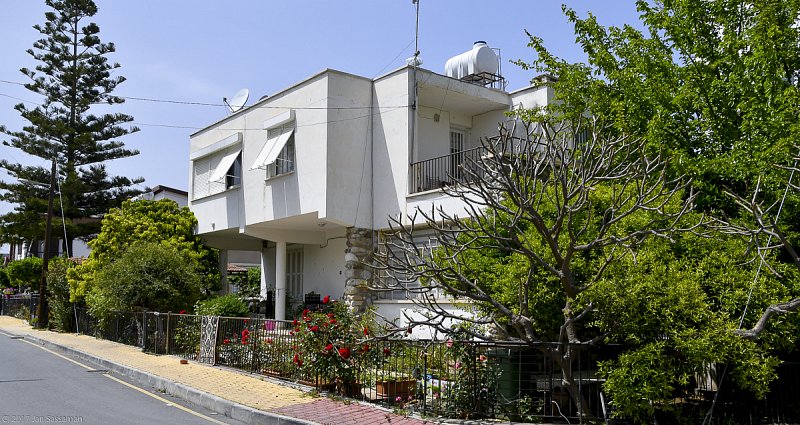
Most houses and businesses that were abandoned in 1974 following the division of the island were subsequently reoccupied by refugees from the other side..This house, built probably in the early 1950's by a Greek school teacher as dowry for his daughter has been occupied each time I have visited - 1988, 2012, and 2017. As refugees fled the north to the south, and the south to the north, year it shows more and more the wear of time.

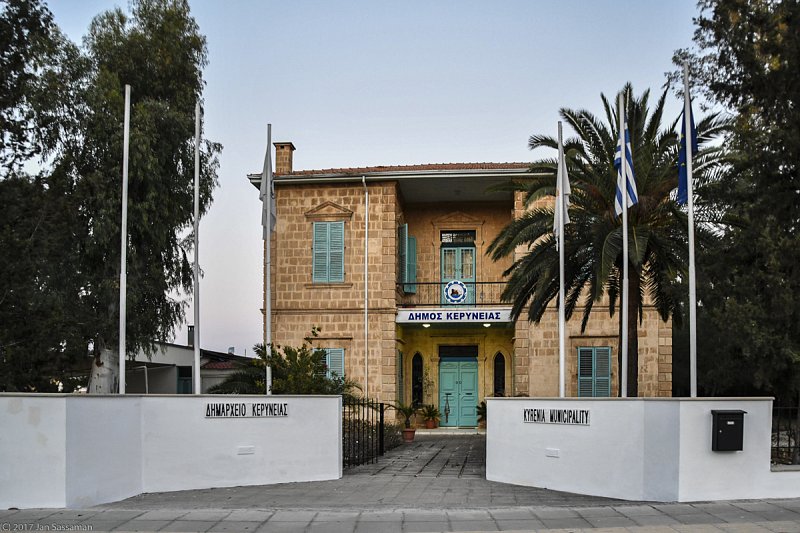
Kyrenia is an ancient port town located on the north coast. The town was reportedly founded before 1,000 BCE by Greeks from the Peloponnese and is in an area where human settlements from as early as the Neolithic Era have been unearthed. As of the Turkish invasion of 1974, there have been two municipal govenments for Kyrenia. The municipality de jure, Greek, is located in this building, is immediately south of the Green Line at the official Ledra Palace check point. The municipality de facto, Turkish, is located on the coast at the town itself, which is presently referred to as "Girne" by the Turkish speaking population..

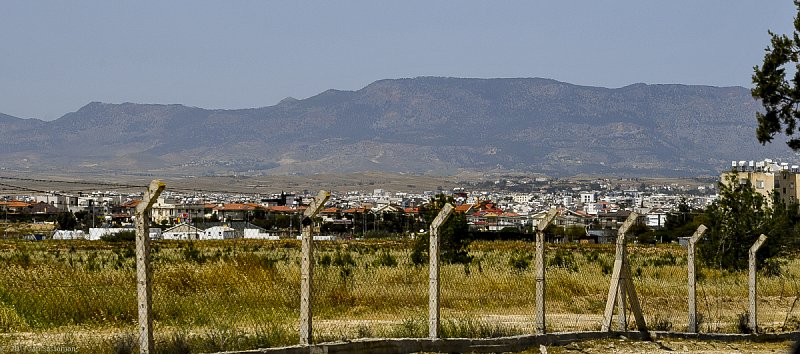
The highway passage from south to north, just west of Nicosia, passes through a fenced off UN-controlled buffer zone. The Pentadaktylos Mountains are in the background.

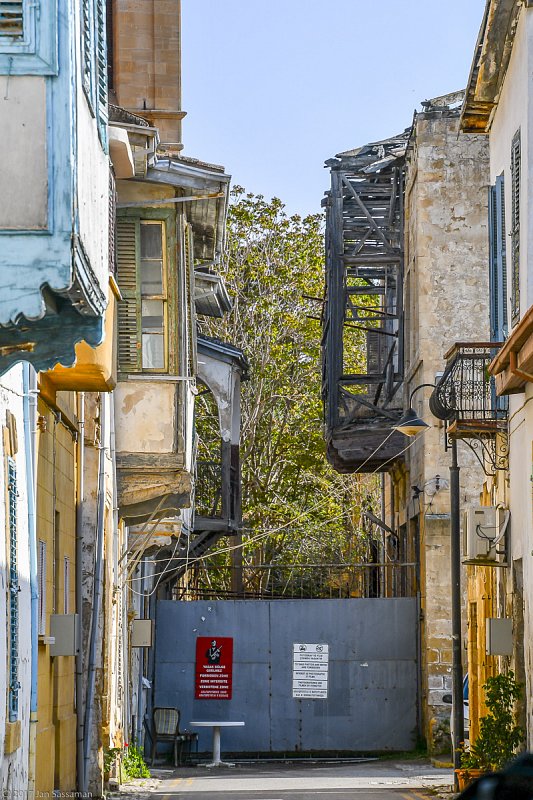
The wall from the northern side in the western part of Nicosia within the ancient city walls (map coordinates are inaccurate here). The buildings on the other side of the wall, in disrepair, are in the . buffer or no-man's zone and are presentlyabandoned.

 Church, Stylloi, Famagusta, Cyprus"%3EProphet Helias (Profitis Ilias) Church, Stylloi, Famagusta, Cyprus%3C/a%3E%3C/strong%3E%3C/p%3E%3Cp%3EThe+Prophet+Hlias+Church%2C+located+in+the+village+of+Stylloi+about+3+to+4+miles+west+of+Salamis+north+of+the+buffer+zone%2C+is+a+substantial+structure+built+in+the+early+20th+Century.+It+was+abandoned+in+1974+as+the+local+Greek+residents+fled+to+the+south.+While+the+structure+of+the+church+is+intact%2C+it+appears+to+have+been+damaged+-%0A+one+bell+tower+appears+to+be+missing%2C+there+is+graffiti+on+the+walls%2C+and+the+headstones+in+the+churchyard+have+been+smashed.%3C/p%3E)